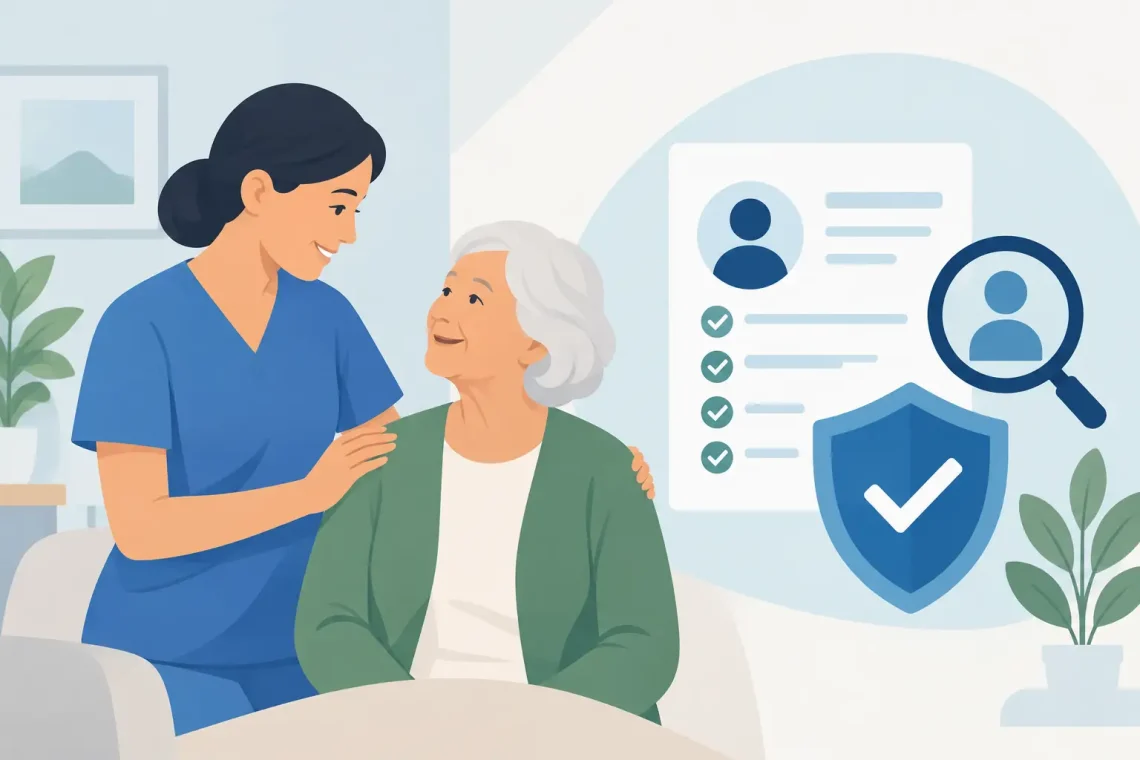
The person who helps your parent bathe, manage medication reminders, prepare meals, or get safely to an appointment will be inside their home when family may not be there. That is why caregiver background checks deserve more attention than a quick online search or a reassuring first conversation.
A background check cannot guarantee kindness, skill, or a good personality fit. It can, however, help families identify information that should affect a hiring decision, verify that an agency follows sensible screening practices, and create a safer process before care begins. For older adults who may be isolated, physically vulnerable, or living with memory loss, that process is part of protecting both dignity and independence.
What Caregiver Background Checks Can Tell You
A meaningful screening process looks beyond whether someone has a clean-looking resume. Depending on the role, state rules, and the employer, a check may review identity information, criminal history, sex offender registry records, driving history, professional licenses or certifications, work history, and references. Agencies may also use drug screening and verify eligibility to work in the United States.
Each item answers a different question. A driving record matters if the caregiver will transport your loved one. License verification matters when the role requires a licensed nurse, home health aide, or other credentialed professional. Employment references can reveal whether the person was reliable, respectful, and able to follow a care plan.
Criminal history needs context. Not every record carries the same relevance, and an old offense does not automatically show that a person cannot provide safe care. Still, families should pay close attention to offenses involving violence, theft, fraud, abuse, neglect, exploitation, or impaired driving when transportation is part of the job. A provider should be able to explain its hiring standards clearly without sharing private details about an employee.
Agency Screening and Private-Hire Screening Are Different
When you work with a licensed home care agency, the agency generally employs or contracts with the caregiver and should handle screening, training, supervision, scheduling, insurance, and replacement coverage. That structure can reduce the administrative burden on a family, but policies vary. Do not assume every agency runs the same checks or repeats them on the same schedule.
Hiring privately can offer more control and may cost less per hour, especially when a family needs a familiar, consistent helper. It also makes the family responsible for more of the process. You may need to verify identity, contact references, obtain consent for any screening, understand employment and tax obligations, and set clear boundaries around duties and access to the home.
The right choice depends on the level of care needed. A few hours of companionship and meal preparation may call for a different arrangement than hands-on personal care, dementia support, overnight supervision, or medication-related assistance. If your loved one’s needs are complex or changing quickly, agency oversight and a backup-care plan can be worth the added cost.
Questions to Ask About Caregiver Background Checks
Ask direct questions before signing an agreement or accepting a caregiver assignment. A reputable provider should treat these questions as normal, not as an accusation.
Start by asking whether every caregiver is screened before entering a client’s home, what records are included, and whether the process covers all states where an applicant has lived or worked. Ask whether the agency checks professional credentials when applicable and how it verifies prior employment and references.
Then ask about ongoing safeguards. Are checks repeated after hiring? Are caregivers trained to recognize abuse, neglect, falls, confusion, and sudden changes in condition? Is there a supervisor or care manager who can address concerns? What happens if your family requests a different caregiver, or if a scheduled caregiver cannot come?
For a privately hired caregiver, request several recent professional references and speak with them yourself. Ask specific questions rather than simply asking whether they would hire the person again. Did the caregiver arrive on time? Follow instructions? Maintain appropriate boundaries? Communicate changes in the older adult’s condition? Handle money or household access responsibly?
It is also reasonable to ask a caregiver how they would handle common situations in your loved one’s routine. Their answers can reveal as much as a report. A strong candidate will understand when to call family, when to call emergency services, and when a task falls outside their training or role.
Consent and Fair Hiring Practices Matter
Background screening is not a shortcut around fair hiring practices. A person should know when a check is being run and provide appropriate authorization. Consumer reporting rules and state laws may apply, particularly when a family uses a third-party screening company. If a report influences a decision, follow the required process rather than relying on informal assumptions or incomplete online information.
If you are unsure how to handle private hiring, an elder law attorney, employment professional, or local senior-care resource can help clarify the responsibilities in your area. Rules can differ by state and by the type of care being arranged.
A Check Is Only One Layer of Protection
Even the most thorough report is a snapshot. It will not show whether a caregiver and older adult communicate well, whether the caregiver is patient during a difficult morning, or whether your parent feels respected. Families need a practical plan for those issues too.
Begin care with clear written expectations. Define the schedule, approved tasks, transportation rules, who can make changes to the care plan, and how caregivers should document concerns. Be especially clear about medication reminders, cash, credit cards, passwords, valuables, and access to financial accounts. A caregiver should never be left to guess what is acceptable.
Regular check-ins are equally valuable. Speak privately with your loved one when possible, and do not dismiss subtle changes in mood or routine. Review notes, watch for unexplained missing items or financial activity, and pay attention if a caregiver tries to isolate your relative from family or discourages oversight. These signs do not prove wrongdoing, but they deserve prompt attention.
For a parent with dementia or limited ability to report concerns, create more frequent points of contact. A family member, neighbor, care manager, or another trusted visitor can help make sure the arrangement remains appropriate. In Sacramento, Placer, and El Dorado counties, local availability can also affect continuity, so ask agencies how they manage caregiver coverage during illness, holidays, and staffing shortages.
When to Pause or Walk Away
A provider that refuses to explain its screening process, cannot confirm relevant credentials, or pressures you to start immediately without a care assessment is giving you useful information. So is a candidate who resists reference checks, avoids straightforward questions about experience, or asks for financial access that is not necessary for the job.
Trust your observations. If your loved one becomes fearful, unusually withdrawn, confused about money, or reluctant to be alone with a caregiver, take the concern seriously. Address immediate safety first, document what you observe, and contact the appropriate agency supervisor or local authorities when abuse, neglect, theft, or exploitation may be involved.
Care is personal, and no checklist can choose the right person for your family. Thoughtful screening gives you a better place to start, while consistent communication helps you keep making the right choice as your loved one’s needs change.
