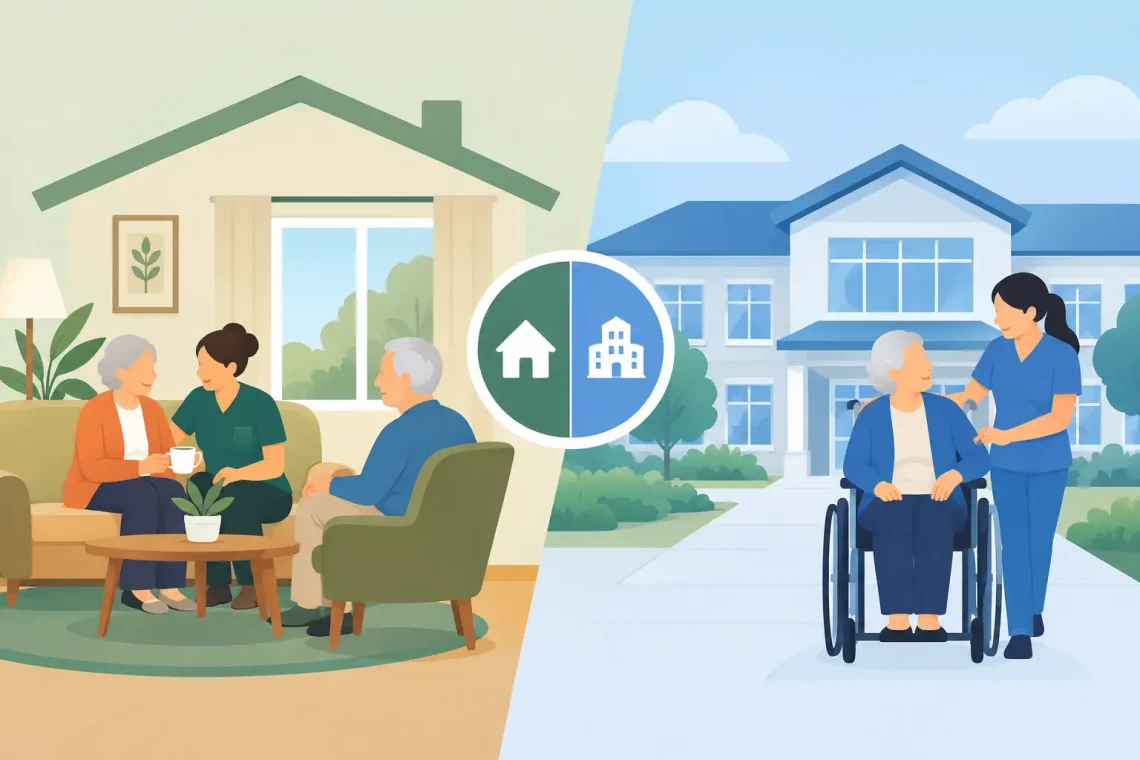
A care decision can become urgent after a fall, a hospitalization, or the quiet realization that Mom is no longer safe managing alone. When families compare board care versus assisted living, the labels can sound like two completely separate choices. In practice, the biggest differences often come down to the home’s size, licensing, staffing, services, and how well the setting fits your loved one’s daily needs.
The right answer is not always the larger community or the smaller home. It is the place that can reliably provide the support your family member needs while protecting dignity, routines, relationships, and as much independence as possible.
What Does Board Care Mean?
“Board and care” generally refers to a smaller residential setting where older adults receive housing, meals, supervision, and personal care assistance. These homes are often located in regular neighborhoods and may serve a small number of residents. You may also hear them called residential care homes, adult family homes, group homes, or care homes.
The term is not used consistently across the country. In California, for example, many homes for older adults are licensed as Residential Care Facilities for the Elderly, or RCFEs. A small board and care home and a larger assisted living community can both hold this type of license, so the name alone does not tell you everything about the care available.
A board and care home may feel more like a household than a senior living campus. Residents may share meals around one table, see the same caregivers every day, and have fewer people coming and going. For someone who becomes overwhelmed in busy environments or prefers a quieter routine, that smaller scale can be a real benefit.
That said, a small home may offer fewer activity choices, less specialized programming, and fewer amenities than a larger assisted living community. It may also have less flexibility if a resident’s care needs increase significantly.
What Is Assisted Living?
Assisted living is a broad category of senior housing designed for people who need help with some daily activities but do not require the around-the-clock skilled nursing care of a nursing home. Residents typically have a private or semi-private room or apartment, meals, housekeeping, transportation options, social activities, and staff available to assist with personal care.
Help may include bathing, dressing, grooming, medication reminders or management, toileting, mobility assistance, and meal support. The exact service package varies widely by community. One assisted living residence may primarily serve active older adults who need light assistance, while another may support residents with more complex mobility or memory-related needs.
Larger communities often provide more built-in social opportunities, such as exercise classes, game nights, outings, religious services, and scheduled events. Some have multiple dining venues, outdoor spaces, salons, or separate memory care neighborhoods. Those features can improve quality of life for the right resident, but they can also raise the monthly cost.
Board Care Versus Assisted Living: The Practical Differences
The most visible difference is usually size. Board and care homes are often smaller, with a more intimate environment and a lower resident-to-caregiver ratio at certain times of day. Assisted living communities are often larger and may have dozens or hundreds of residents, more common spaces, and a broader calendar of activities.
Size does not automatically determine quality. A well-run larger community can provide attentive, personal care. A small home can be warm and familiar but may struggle if staffing is thin or a caregiver calls out. Families should ask how coverage works overnight, during meals, and when a resident needs unexpected help.
The care model can differ, too. In a board and care home, one caregiver may handle many parts of the household routine, from preparing meals to assisting residents with personal care. In assisted living, responsibilities may be divided among care staff, dining staff, activity staff, medication technicians, and managers. Neither structure is inherently better. The question is whether it gives your loved one timely, respectful support.
Social life is another meaningful trade-off. A smaller home may be ideal for an older adult who wants familiar faces and low-key conversation. A more social person may feel isolated there and do better in a community with peers, programs, outings, and varied spaces to spend time.
Compare Care Needs Before Comparing Buildings
Before scheduling tours, write down what your loved one needs help with now and what may change in the next year. A family can be drawn to a beautiful community or a cozy home, then learn that it cannot safely manage two-person transfers, frequent nighttime assistance, insulin administration, wandering, or advanced dementia behaviors.
Start with daily functioning. Can your family member bathe, dress, use the bathroom, walk safely, and take medications without help? Are meals being skipped? Is there confusion, missed appointments, weight loss, falls, or trouble getting out of bed? These details matter more than whether a setting calls itself board and care or assisted living.
Also consider emotional fit. Someone who has always valued privacy may need a private room and a clear way to control their own schedule. Someone grieving a spouse may benefit from regular social connection. A person with dementia may need structured routines, visual cues, secure outdoor access, and staff trained to respond calmly to changes in behavior.
If care needs are medically complex, ask whether assisted living or a board and care home is appropriate at all. Skilled nursing, home health, hospice, or another level of care may be needed. A community should be clear about what it can and cannot provide rather than promising to “figure it out” after move-in.
Cost: Look Beyond the Starting Monthly Rate
Board and care homes may have lower base prices than larger assisted living communities, particularly when they offer shared rooms and fewer amenities. But prices vary by local market, room type, care level, and staffing needs. In Sacramento County, Placer County, and El Dorado County, availability and pricing can differ sharply even between nearby neighborhoods.
Assisted living communities commonly charge a base monthly rate plus care-level fees. A published starting price may cover rent, meals, and basic services, while assistance with bathing, medication management, incontinence care, transfers, or memory support adds substantial monthly costs.
Ask for a written breakdown of every expected charge. Families should understand the move-in fee, community fee, deposit, medication fees, transportation charges, laundry costs, and the conditions that trigger a care-rate increase. Ask how often assessments occur and what happens if your loved one needs more help after moving in.
Medicare generally does not pay for long-term room and board in assisted living or board and care homes. Some people use savings, long-term care insurance, veterans benefits, Medicaid-related programs, or a combination of resources. Eligibility and coverage rules vary, so do not assume a home accepts a particular payment source without confirming it directly.
Questions That Reveal Whether a Place Is a Good Fit
A tour should feel like an assessment, not a sales presentation. Notice whether residents appear engaged, comfortable, and clean, but also ask direct questions about the care your loved one needs. Four questions can bring useful clarity:
- How many caregivers are working during the day, evening, and overnight, and how many residents do they support?
- What training do staff receive for dementia, falls, medication management, and behavioral changes?
- Which needs would require a resident to move out or transfer to another care setting?
- How do you communicate with families after a fall, medication concern, hospital visit, or change in condition?
Visit at more than one time if possible. A polished daytime tour may not show what the home feels like at dinner, during shift changes, or in the evening when residents need help getting ready for bed. Trust your observations, but verify them with specific answers and written policies.
Focus on the Home Your Loved One Can Live In Well
The decision between board care and assisted living is rarely just about square footage or amenities. It is about whether your loved one will receive consistent help, be treated with patience, have meaningful human contact, and remain safe without losing their sense of self.
A smaller care home may offer the familiarity your family member needs. A larger assisted living community may offer independence, activity, and room to build a new routine. Take the time to compare local options carefully, ask what happens as needs change, and choose the setting that feels prepared to care for the person – not just fill the room.
