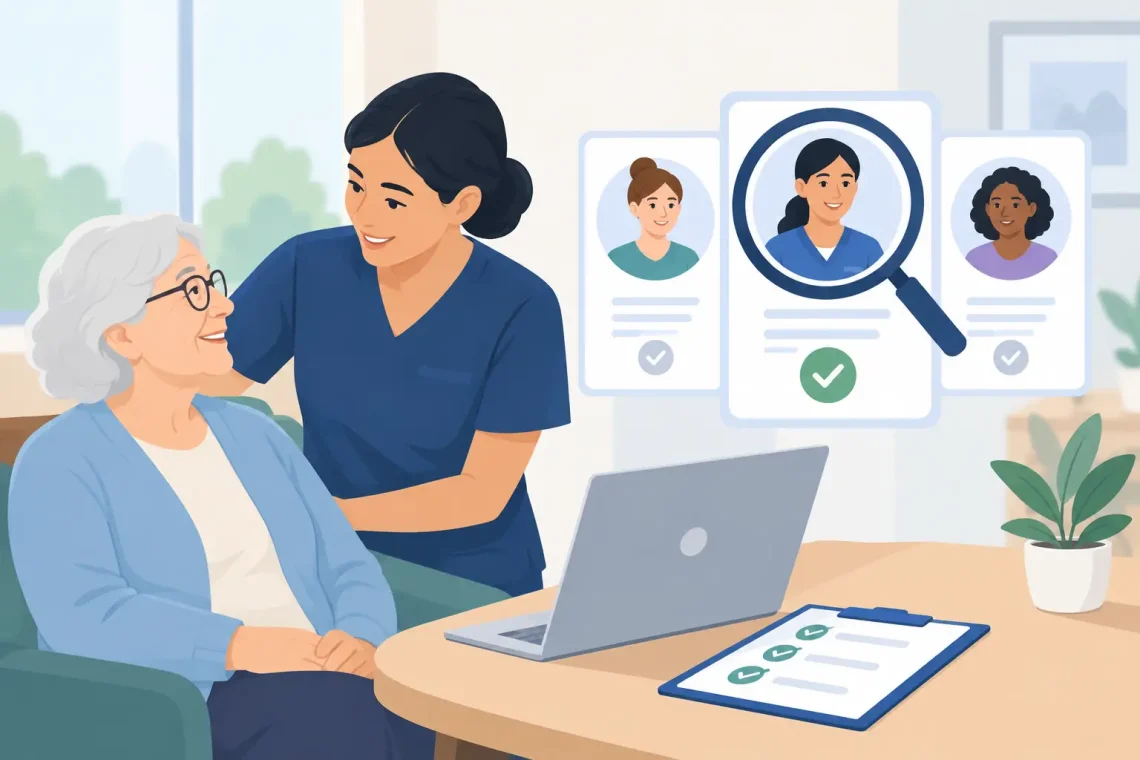
A private aide may be the person who helps your parent get out of bed, remembers the details of a difficult morning, notices a new bruise, or spends quiet hours in the home when family cannot be there. That is why families need to screen private care aides with more care than a quick conversation and a favorable rate.
Hiring directly can offer flexibility, continuity, and a more personal arrangement. It can also place the family in the role of employer, scheduler, record keeper, and first line of protection. A thoughtful screening process helps you find someone whose skills, judgment, and manner fit your loved one’s needs.
Start by defining the help your family needs
Before speaking with candidates, write down what support is actually needed. “Help at home” can mean very different things. One older adult may need companionship, meal preparation, and transportation. Another may need hands-on help with bathing, transfers, toileting, dementia-related supervision, or reminders to take medication.
Be specific about the schedule, including weekends, evenings, overnight shifts, and minimum hours. Also note the physical demands of the role. If your loved one needs help transferring from a bed to a wheelchair, say so clearly. A caregiver who is warm and dependable may still not be the right fit if the job requires training, strength, or experience they do not have.
Private care aides generally provide nonmedical support. They may assist with personal care and daily activities, but they are not automatically qualified to provide skilled nursing, manage complex medical treatments, or make clinical decisions. When needs include wound care, injections, medication administration, or frequent changes in condition, ask the older adult’s medical team what level of licensed care is appropriate.
A written task list gives every candidate the same picture of the job. It also prevents a common problem: the duties slowly expand after hiring until the aide is being asked to do work they never agreed to perform.
How to screen private care aides before an interview
A resume is a starting point, not proof of suitability. Ask candidates to provide a work history that accounts for recent years, relevant training or certifications, and at least two professional references from families, supervisors, or care agencies. Personal references can be useful, but they should not replace people who have observed the candidate working in a care setting.
Explain early that employment will depend on reference checks, verification of credentials when applicable, and a background screening completed with the candidate’s written permission. The exact checks and hiring rules can vary by state and local requirements, so families should understand the rules where they live before proceeding.
For an independent caregiver, consider whether the screening includes criminal history, identity verification, driving history if transportation is part of the job, and any relevant abuse or neglect registry checks available in your area. A clear screening process is fair to applicants and protective of the person receiving care. Do not rely on informal online searches or assumptions based on a candidate’s appearance, age, or personality.
It is also reasonable to ask about work authorization and whether the caregiver is comfortable being paid as an employee. Families who hire an aide directly may have payroll tax, workers’ compensation, wage-and-hour, and insurance responsibilities. A local employment professional or elder law attorney can clarify the arrangement. Paying someone “off the books” may seem simpler at first, but it can create serious problems if there is an injury, dispute, or tax issue.
Call references with a prepared set of questions
Reference calls are most useful when you go beyond “Would you hire this person again?” Ask how long the aide worked with the family, what tasks they performed, and whether the older adult had mobility, memory, or behavioral challenges.
Ask whether the aide arrived on time, communicated changes promptly, respected privacy, and followed the family’s care routine. Find out how they handled a fall, a refusal to bathe, confusion, or a sudden change in behavior. A reference should be able to describe real examples, not only offer broad praise.
Listen for gaps between the candidate’s description and the reference’s account. One imperfect answer is not necessarily a disqualifier. Evasive answers, unexplained job departures, or a reference who cannot confirm basic facts deserve follow-up.
Use the interview to assess judgment and fit
The interview should cover qualifications, but it should also reveal how a candidate thinks. Aides often work without a family member in the room. You need someone who can recognize a concern, stay calm, and know when to call you, 911, or a medical professional.
Ask scenario-based questions. For example: “What would you do if my father seemed more confused than usual?” or “How would you respond if my mother refused help with a shower?” A strong candidate will not promise to force cooperation or dismiss a change in condition. They will describe respectful communication, observation, documentation, and escalation when needed.
Discuss boundaries directly. The aide should understand expectations about visitors, smoking, alcohol, social media, borrowing money, accepting large gifts, and handling the older adult’s bank cards, cash, passwords, or financial records. Caregivers often help with errands, but access to money should be limited, documented, and monitored. Convenience should never require giving up basic safeguards.
If dementia is involved, ask about experience with redirection, agitation, wandering risk, and maintaining a calm routine. If the person uses a walker or wheelchair, ask about transfer training and fall prevention. The best fit depends on the situation. A candidate with extensive dementia experience may not be necessary for a companion role, while it may be essential for someone who becomes disoriented or unsafe when alone.
When possible, include your loved one in the meeting. Their comfort matters. Watch whether the candidate speaks to the older adult rather than only to family members, waits for an answer, and treats them as an adult with preferences. A friendly first meeting is encouraging, but it should not outweigh concerns about skill or reliability.
Put expectations in writing before the first shift
A private hire should have a written agreement. It does not need to be complicated, but it should identify the schedule, pay rate, overtime practices, duties, transportation expectations, call-out procedures, confidentiality expectations, and how either party can end the arrangement.
Create a simple care plan for the home. Include emergency contacts, medical conditions and allergies the aide needs to know, mobility precautions, preferred routines, food restrictions, and instructions for documenting concerns. Keep private medical and financial details limited to what the aide needs to do the job safely.
Set up a method for communication from the beginning. A shared notebook or secure family log can record meals, activities, mood changes, missed medications that require family follow-up, falls, and appointments. The purpose is not to micromanage every hour. It is to make patterns visible and ensure that a change in condition does not get lost between shifts.
A paid trial period can be helpful, especially for regular care. During the first few shifts, arrange for a family member to be nearby if possible. Observe how the aide follows instructions, handles downtime, communicates, and responds when the routine changes. Check in privately with your loved one afterward, using open questions rather than asking only whether they “like” the caregiver.
Watch for warning signs after hiring
Screening does not end on the hiring date. Stay alert to repeated lateness, unexplained absences, defensiveness when asked about routine care, or pressure to change payment arrangements. Other concerns include isolation from family, missing belongings, unusual financial requests, poor hygiene care, frequent unexplained injuries, or a loved one who becomes noticeably fearful or withdrawn.
Not every concern means wrongdoing. An older adult’s condition can change, and personality conflicts happen. Address issues promptly, document what occurred, and adjust the care plan if needed. If you suspect abuse, neglect, exploitation, or immediate danger, prioritize your loved one’s safety and contact emergency services or the appropriate local protective agency.
Consider when an agency may be the better choice
Direct hiring is not the only path. A home care agency may handle recruiting, supervision, scheduling, payroll, and replacement coverage. That can be valuable when care is needed quickly, shifts are hard to staff, or family members live far away. Agencies also vary widely, so ask what screening they perform, whether caregivers are employees, how supervision works, and what happens if the assigned aide is unavailable.
A private hire may cost less per hour and allow a family to choose one consistent caregiver. An agency may offer more backup and administrative support. The right decision depends on the hours needed, the complexity of care, local availability, and how much coordination the family can realistically manage.
For families in Sacramento, Placer, or El Dorado County, local availability can shape the decision just as much as preference. A candidate who looks ideal on paper is not a workable choice if they cannot reliably cover the required hours or travel to the home.
The goal is not to find a perfect person after one interview. It is to build a careful process that gives your loved one a capable, respectful presence at home and gives your family a clear way to notice when care is working well.

Comments are closed here.